
The Anna May Wong Quarter released in 2022 as part of the American Women Quarters Program represents a historic moment marking the first time an Asian American woman appeared on US currency.
Despite the massive cultural importance surrounding Anna May Wong as a person, most coins found today sell for exactly 25 cents because of basic economic laws and production rules.
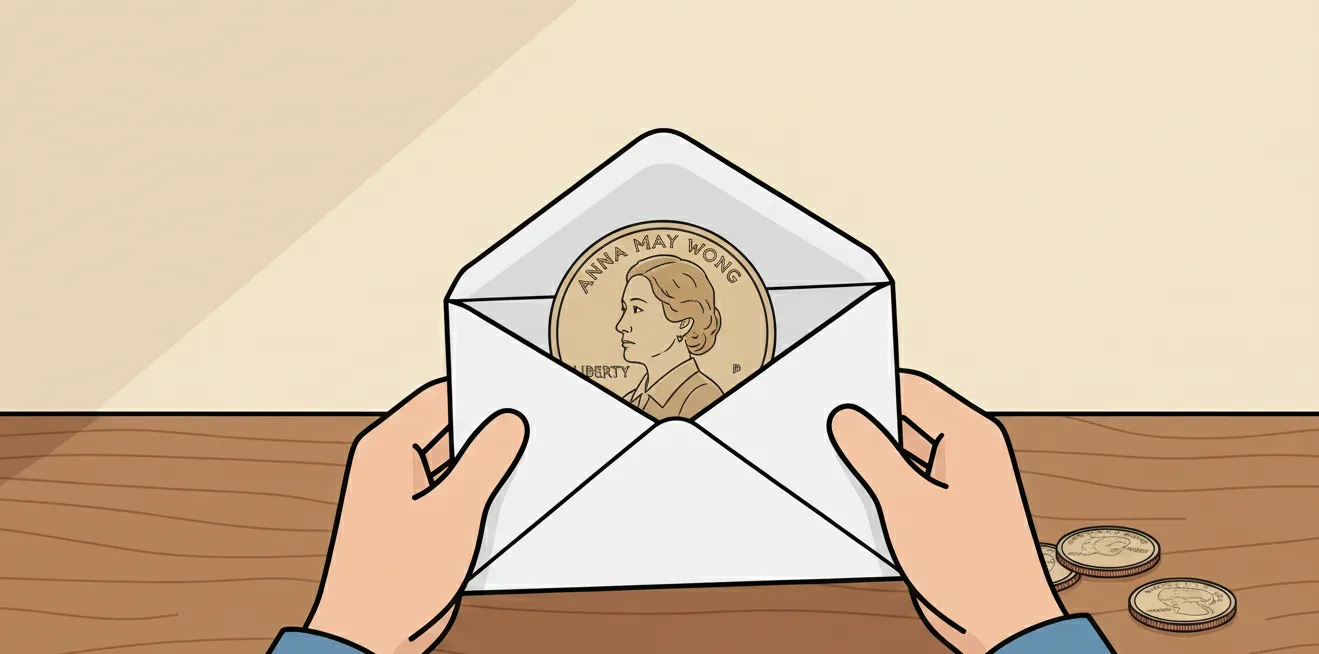
This situation depends on the balance between total supply and collector demand, with the government making enough coins to support daily trade across all states.
Massive Production Numbers
The primary reason for the low market price rests on the total number of coins created by the government.
The United States Mint operates to provide money for stores and banks, resulting in millions of coins made every year to replace old currency.
Rareness stays the main factor pushing collectors to pay more than the face value, but these specific quarters exist in such high numbers that finding one remains simple for anyone.
Mint Location | Mint Mark | Estimated Production |
Philadelphia | P | 240.8 M |
Denver | D | 226.8 M |
San Francisco (Regular) | S | Limited to Sets |
The total number of coins made for circulation exceeded 460 million pieces, ensuring every person living in the country can easily find at least one coin in their pocket.
Lacking any shortage of supply, the market sees no reason for price increases because buyers refuse to pay extra for items readily available in change.
High availability turns the coin into a regular tool for buying goods rather than a rare object for long-term investment.
Bank Distribution Systems
The US Mint avoids selling coins directly to citizens for daily spending, instead sending massive shipments to the Federal Reserve System responsible for moving cash to commercial banks.
This process moving money through the economy ensures that Anna May Wong quarters mix with billions of other coins from previous years.
Coins arriving at banks in large bags or boxes.
Cashiers giving coins to customers in standard 40-piece paper rolls.
Shoppers receiving coins as change and spending them again immediately.
Coins moving through machines quickly gaining scratches and losing their original shine.
Using the coin as a payment tool constantly lowers its physical condition, making it less appealing to serious collectors.
People searching for coins want perfect samples showing no signs of use, but coins found in a regular wallet always have small marks caused by hitting other metal objects.
These damaged pieces hold no interest for the professional market, staying valued at exactly 25 cents but anyway it’s better to be checked with a coin identifier app.
Lack of Precious Metals
Modern quarters including the American Women series contain no silver, differing from coins made many decades ago. Since 1965, the government has used a copper-nickel metal mix, creating a coin with a pure copper center and outer layers made of 75% copper and 25% nickel. Using these cheap materials makes the cost of producing each coin very low for the government.
Metal value inside the coin staying below one cent.
Coins providing no protection against inflation because of the cheap metal content.
Weight and size remaining standard for vending machines and laundry systems.
Absence of silver removing the reason for people to buy the coin for its metal weight.
Price increases for silver coins happen when the global price of silver goes up, but these copper-nickel quarters have their value set only by the government.
Most people view these coins as simple tools for purchasing small items, ignoring any possibility of saving them to build wealth.
Professional Grading Factors
A small number of Anna May Wong quarters sell for hundreds of dollars, but this happens only for coins getting the highest scores in specialized labs. Professional services check every coin under a microscope, giving a score based on a 70-point scale used by all experts.
Scores like MS67 or MS68 appearing only in rare cases.
Obtaining high scores requiring the coin to stay in a special package or a fresh roll without touching any other objects.
Evaluation procedures costing between 20 and 50 dollars for a single coin.
Regular coins found in a purse never getting high scores because of microscopic damage.
Owners spend money on these tests only when believing the coin is perfect, but a coin looking "nice" to a regular person usually fails the expert check.
Costs relating to shipping and grading often stay higher than the actual market price of the coin itself.
Because of this, regular people avoid grading their quarters, leaving them in the category of common money.
Series Impact and Collector Interest
The American Women Quarters Program spans several years, with five different designs appearing every twelve months.
This constant flow of new coins creates a situation where the market receives new options every few months.
Collector attention moves quickly from Anna May Wong to newer releases, such as coins featuring Eleanor Roosevelt or other famous women.
Collectors usually building full sets including every year and design.
Single coins separated from a set holding low value for the market.
Most people keeping one coin for a memory while spending the rest on daily needs.
Speculative interest fading fast after the next design enters circulation.
The excitement slowing down leaves the coins moving through the economy as regular payment methods.
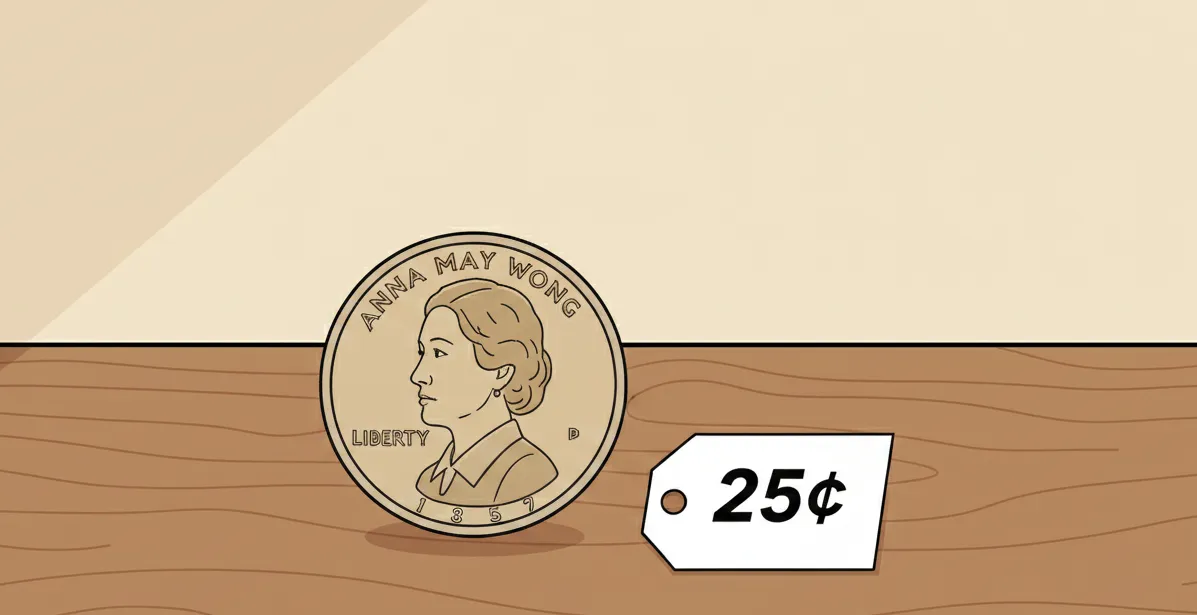
Increasing the price requires waiting many decades for most coins to be lost or destroyed by the banking system.
Expecting a price jump for common samples remains unrealistic given the current production levels.
Mint Errors as Exceptions
The only way a regular Anna May Wong quarter costs more than 25 cents involves finding a rare production mistake.
Machines at the US Mint sometimes fail, creating coins that look different from the intended design.
Die cracks creating raised lines on the coin surface.
Double strikes making the image look blurry or showing repeated letters.
Printing on a metal piece intended for a different coin size.
Missing parts of the image caused by dirt getting into the machine.
Finding these mistakes happens rarely, attracting professional buyers looking for unique items — these ones are better to be checked with a free coin appraisal app to know for sure.
However, 99.9% of all coins show no defects, making them ordinary quarters.
A person rarely finds such a sample in their life, and without a confirmed mistake, the coin remains just 25 cents.
Availability of Special Proof Sets
The US Mint creates special versions of coins for collectors, selling them in beautiful packages and giving them a mirror-like surface. These coins called "proof" coins follow different production rules than regular quarters.
Production numbers for proof sets staying much lower than coins for circulation.
Proof coins never entering banks or regular stores.
Plastic cases protecting the coin surface from any air or touch damage.
Initial prices for these sets staying higher than the face value from the start.